Global Accessibility Awareness Day - 2026
GAAD is a free campus community event. We ask that DU campus members please register to help us with the lunch count order.
Registration
Thursday, May 21, 2026
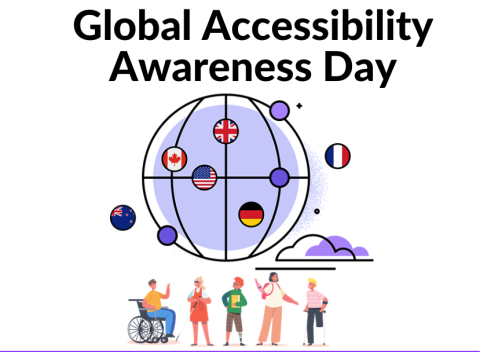
Join us either in-person or on Zoom for our upcoming Global Accessibility Awareness Day (GAAD) event at DU. As GAAD states, “The purpose of GAAD is to get everyone talking, thinking and learning about digital access and inclusion, and the more than One Billion people with disabilities/impairments.” Come hear from a panel of DU community members and guest speakers about their stories and experiences.
What is Digital Accessibility?
Every user deserves a first-rate digital experience on the web. Someone with a disability must be able to experience web-based services, content and other digital products with the same successful outcome as those without disabilities. This awareness and commitment to inclusion is the goal of Global Accessibility Awareness Day (GAAD), a global event that shines a light on digital access and inclusion for people with disabilities.
Lunch Provided
For our in-person attendees, we will have delicious empanadas from Maria’s Empanadas, a local Denver restaurant that serves a variety of meat and vegetarian empanadas.

Agenda
- 9:00 am - 9:15 am - Opening Statement Dr. Kristin Deal, Assistant Vice Chancellor of Community Support and Engagement (CSE)
- Community Commons 1700 | Register via CrimsonConnect.
- 9:10 am – 10:15am Keynote Speaker - Dr. Arielle Silverman and Emily Romero - Artificial Intelligence and Accessibility.
- As the GAAD keynote, Dr. Silverman will showcase how Artificial intelligence (AI) is rapidly permeating the ways we work, learn, play, and live. Because AI can readily convert information from one modality to another, it has great potential to increase access for users with disabilities. However, without proper guardrails, AI also carries risks for people with disabilities, particularly risks of algorithmic bias and discrimination, privacy losses, and safety harms. In this presentation, researchers from the American Foundation for the Blind will discuss a series of principles for disability-inclusive AI, derived from a consensus-building study with AI experts. The principles help build a roadmap for AI developers, deployers, and policymakers to follow to ensure that AI includes everyone.
- Community Commons 1700 | Register via CrimsonConnect.
- 10:15 am - 10:30 am Break
- 10:30 am - 11:30 am - Breakout Session 1: Presenters Arielle Silverman and Emily Romero
- In this interactive session, you will create your own accessible deliverable with AI! While AI cannot make everything accessible, AI can describe previously confusing images, and format your documents in a way that is easy for screen readers to read. Come prepared with something in your field you want to see made accessible, whether it is a handout with graphics, a tricky table, or an idea you want to newly explore today. I will use Chat GPT for this demonstration, and will walk you through remediating an inaccessible file. Then, we will work together on creating yours. Questions are welcome throughout the workshop.
- 10:30 am - 11:30 am - Breakout Session 2: Calley and her WRIT 1133 Students.
- During this break out, students from WRIT 1133, Researching and Writing Access, will model accessible presentation and research methods. They will discuss findings from a qualitative class research study about student access on campus in order to improve DU accessibility for all students.
- 11:30 am - 11:45 am Break
- 11:45 am - 12:45 pm Lunch
- 12:10 am - 12:40 pm Digital Accessibility Awards! (Student, Department, and Faculty).
- Community Commons 1700 | Register via CrimsonConnect.
- Announcements by:
- Faculty Award – Presented by Chancellor Dr. Jeremy Chancellor Haefner
- Student Award – Presented by Provost Dr. Elizabeth Loboa
- Department – Presented by VC of HR - Jeff Banks
- 12:45 pm - 1:00 pm - Break
- 1:00 pm - 2:00 pm - Afternoon Keynote - Mariah Moore and Dan Burke
- Accessibility decisions happen constantly, but whose voices shape them? This presentation examines the cost of exclusion and explores what genuine co-design of accessible solutions requires: not consultation, not accommodation, but authentic partnership where people with lived experience of disability have real decision-making power. Drawing on lived experience and institutional examples, we'll unpack the principle "nothing about us without us" and challenge the gaps between who we include and who we empower.
- 2:15 pm - 3:30 pm Student Panel - Moderated by Dr. Niki Latino, Dean of Students
- Community Commons 1700 | Register via CrimsonConnect.
Guest Speakers and GAAD Awards
Dr. Arielle Silverman, Director American Foundation for the Blind
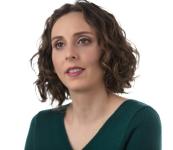
Arielle Silverman is the director of research at the American Foundation for the Blind, where she manages AFB’s research portfolio including studies about technology accessibility, employment, and aging for Americans who are blind or have low vision. Previously, Arielle has worked as an independent disabilities research and training consultant, as a technical writer for the National Rehabilitation Information Center, and as a research scientist for the University of Washington Department of Rehabilitation Medicine. Her strongest research interests include disability identity, employment barriers, ableism reduction, and neurodiversity. Arielle received her doctorate in social psychology from the University of Colorado at Boulder in 2014.
Emily Romero, American Foundation for the Blind
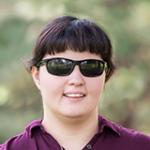
Emily M. Romero holds an M.A. in applied psychology and creative writing from Regis University in Denver, CO, and now studies educational psychology at the University of Northern Colorado in Greeley. While most of her research focuses on creativity in education, accessibility is an important part of the work she does. She has recently created a repository of openly available educational resources designed for accessibility and inclusivity. Contact her at: emily.m.romero.2000@gmail.com.
Maria Moore, Denver Art Museum
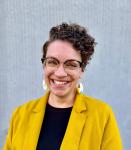
Mariah Moore is the Manager of Lifelong Learning and Accessibility at the Denver Art Museum. With over a decade of experience in accessibility and disability nonprofit work, Mariah leads accessibility and inclusion initiatives at Denver Art Museum. She currently is working on the museum's Designing for Accessibility project—a 3-year initiative focused on co-designing accessible experiences with members of Denver's disability community. She approaches this work with a "nothing about us without us" mindset that centers the voices and expertise of disabled visitors and community members.
Dan Burke, Colorado Center for the Blind
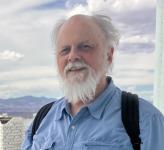
Dan Burke is a long-time member and leader in the National Federation of the Blind.Professionally, he has served as the Public Relations Specialist at the Colorado Center for the Blind since 2013, for 17 years as Assistant Director of Disability Services for Students at the University of Montana, and as a Vocational Rehabilitation Counselor in Montana. Growing up in art-centric Loveland, Colorado, experiencing and creating art was just in the water, even for a low vision kid. His introduction to accessible art nearly 30 years ago rekindled Burke’s pursuit of artistic experiences that were accessible. Thus, when the Denver Art Museum sought participation in its Design for Access project, he leapt at the opportunity to contribute.Burke is married to Julie Deden, Director of the Colorado Center for the Blind and has one adult child. He and Julie live in Centennial.
GAAD Staff, Faculty and Student Awards
Lucy Edwards, Staff Award - Graduate School of Social Work
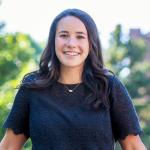
Lucy is the Career and Student Engagement Coordinator at the Graduate School of Social Work (GSSW). In this unique role, Lucy combines career services with student engagement to holistically support students throughout their academic and professional journeys.
She provides individualized career advising and designs a wide range of career and engagement programming for students, staff, faculty, and alumni. Her work includes organizing events and presentations, developing marketing materials, and managing outreach efforts. Lucy also supports key community-building initiatives, including co-creating the GSSW Neurodiversity Network for Peers, Allies, and Alumni, the GSSW Mentorship Network, and all the GSSW student affinity organizations.
Lucy has a background in Clinical Mental Health Counseling working with Neurodivergent individuals and families across the lifespan. Through this passion, education ,and training Lucy continues to work to improve inclusivity and accessibility within her work at DU to better serve the community.
Talya Riciputi - Student Award
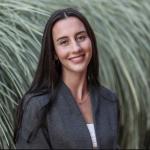
Talya Riciputi is pursuing a sociology major and leadership minor at the University of Denver. She is an advocate for accessibility, inclusion, and equity for neurodiverse learners and people with disabilities. Drawing on her own lived experience, Talya brings a grounded, personal perspective to the work of dismantling barriers in education and beyond. She has worked with the Denver Waldorf School as a mentor for students with learning differences, as well as engaging with curriculum at DU around disability justice. She is passionate about raising the visibility of those most affected by inaccessibility and building systems that work for everyone.
Olivia Tracy - Faculty Award
Student Panel Speakers (2:15 pm – 3:30 pm)
Five DU students will participate in an open discussion moderated by Dr. Niki Latino.
Questions include:
- Share a time at DU where considerations of accessibility supported your learning.
- Share a time at DU where you experienced barriers to accessibility and what are possible solutions.
- Are there any specific technologies or assistive tech that have significantly improved your educational experience?
- How can DU raise awareness about the importance of accessibility among students, faculty, and staff on campus?
- What initiatives or resources do you think could promote more inclusivity and accessibility for DU community members?
Students: TBD
Location
The Community Commons room 1700 (2055 E Evans Ave, Denver, CO 80210) is located in the center of campus off Evans Boulder. It's a 15-minute walk (half mile) away from the University of Denver RTD Stop moving south. There are hourly paid parking facilities located at Asbury Ave Hourly Street Parking, Ricketson Law Building Garage, and Evans Garage.
Digital Accessibility Tech Tips
1. Use Proper Heading Structure (<h1>, <h2>, etc.)
- Organize content with clear headings.
- Don’t skip heading levels (like jumping from <h1> to <h4>).
- Helps screen reader users and improves navigation.
2. Add Descriptive Alt Text for Images
- Every informative image should have meaningful alt text.
- Decorative images? Use alt="" to skip them for screen readers.
Bad: alt="image1"
Good: alt="A golden retriever playing in a field"
3. Ensure Sufficient Color Contrast
- Text should have high contrast against its background.
- Use tools like WebAIM Contrast Checker to test.
Example: Light gray text on white = 😬
Dark blue on white = ✅
4. Make All Interactive Elements Keyboard-Accessible
- Users should be able to navigate and interact using just a keyboard (Tab, Enter, Space).
- Don’t trap focus inside modals or menus!
5. Use Meaningful Link Text
- Avoid "click here" or "read more".
- Link text should describe the destination or action.
Bad: [Click here]
Good: [Download the accessibility guide (PDF)]
6. Support Neurodivergent Students - Reduce cognitive load
- Keep sentences short, 20 words in a sentence
- Simplify Layout & Reduce Visual Clutter
- Use consistent layout pattern
- Use Clear, Concise, and Plain Language
- Break up long paragraphs
- Use bullet points or numbered lists
- Avoid jargon or overly academic language
7. Use the Canvas course accessibility checker
- Use the UDOIT Accessibility in Canvas to improve course material accessibility
Bonus Tools:
- Screen readers: NVDA (Windows), VoiceOver (Mac), JAWS
- Accessibility checkers: WAVE, axe DevTools, Lighthouse (in Chrome DevTools)
- Digital Accessibility Tech Tips (PDF)
- Fundamentals of Accessible Digital Content in Canvas
Thank you to our financial sponsors!
- Equal Opportunity & Title IX
- Human Resources & Inclusive Community (HRIC)
- Division of Diversity, Equity, and Inclusion
- Information Technology
- VZP Digital
- DU Center for Ethical Generative Artificial Intelligence Applications (CEGAIA)
Accommodations
We strive to host inclusive, accessible events that enable individuals of all abilities to engage fully. To request an accommodation or for inquiries about accessibility, please contact the ADA Coordinator at ADA.Coordinator@du.edu. Please note that without adequate notice before the event, we may not be able to provide reasonable accommodations.
Planning Committee
- Megan Davis, Student Affairs & Incl Excellence
- Elise Goss-Alexander, Student Employment
- Lucy Edwards, Graduate School of Social Work
- Bill Casson, Information Technology
- Josiah Dunn, Information Technology
- Terri Johnson, Office of Teaching and Learning
- Joshua Kaufman, Equal Opportunity & Title IX
- Craig Miller, HR and Inclusive Community
- Cassy Zapotocky, HR and Inclusive Community
- Talya Riciputi, Student Relations
- Catherine Marotta, Teaching Assistant Professor, Writing Program
- Kristin Deal, Assistant Vice Chancellor, Community Support and Engagement (CSE)
Registration
GAAD is a free campus community event. We ask that DU campus members please register to help us with the lunch count order.
Registration